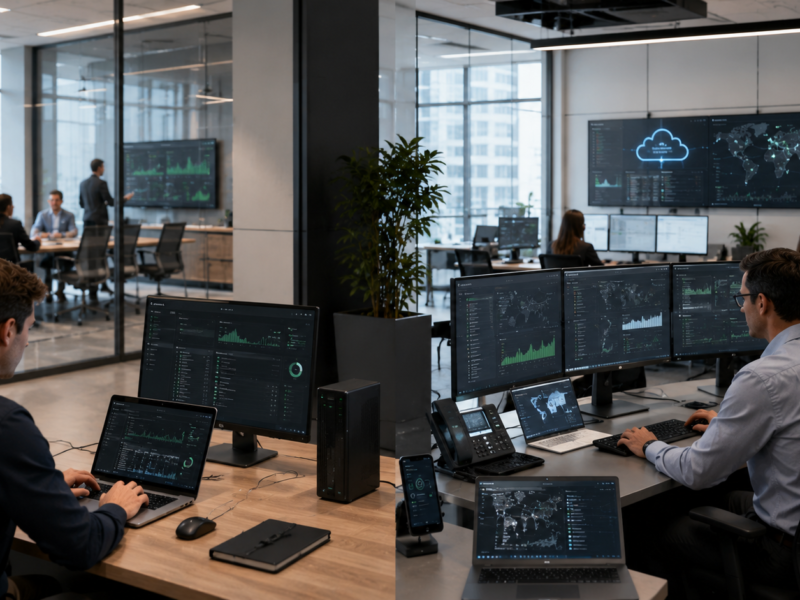
Introduction to Cloud-Based SIEM
Security Information and Event Management (SIEM) represents a pivotal aspect of modern enterprise security, offering comprehensive solutions for security monitoring and compliance. Traditionally, SIEM systems were deployed on-premises using hardware appliances, which, while effective, often faced scalability and maintenance challenges. However, with the advent of cloud computing, SIEM solutions have evolved into cloud-based models, which provide enhanced flexibility and efficiency.
Cloud-based SIEM leverages the scalability and power of cloud infrastructure, enabling organizations to collect, store, and analyze security events from various sources in real time. This model allows enterprises to monitor their security environment without the heavy investment and upkeep associated with on-premises hardware. Organizations can now easily scale their SIEM resources based on their needs, which is particularly beneficial in today’s fast-paced business landscape where data volumes are continuously increasing.
The functionality of cloud-based SIEM systems encompasses real-time data collection from multiple security devices, log management, and alerting capabilities. The efficiency of these systems lies in their ability to aggregate and correlate vast amounts of data, making it possible for security teams to detect and respond to threats promptly. By analyzing security events and identifying patterns, cloud-based SIEM solutions help organizations strengthen their defenses against potential cyber threats.
Furthermore, the shift towards cloud-based SIEM enhances collaboration among security teams. With centralized access to security data stored in the cloud, teams can work together efficiently, regardless of geographical locations. This collaborative approach is essential for addressing today’s sophisticated cyber threats, which often require swift and coordinated responses. The adoption of cloud-based SIEM solutions is becoming increasingly essential for enterprises striving to protect their critical assets in a complex digital world.
Benefits of Cloud-Based SIEM
As enterprises navigate the complexities of modern cybersecurity, adopting Cloud-Based Security Information and Event Management (SIEM) solutions offers numerous advantages tailored to meet the demands of ever-changing environments. One of the most significant benefits of cloud-based SIEM solutions is their scalability. Unlike traditional on-premises solutions, which often require substantial investment in hardware and software, cloud-based solutions effortlessly adapt to an organization’s growing needs. This adaptability ensures that companies can expand or downsize their SIEM capacity as required, making it a cost-effective choice for businesses of all sizes.
In addition to scalability, cost-effectiveness is a compelling reason for enterprises to consider cloud-based SIEM. Eliminating the need for extensive infrastructure reduces capital expenditures, allowing organizations to allocate resources more efficiently. With a subscription-based model, businesses benefit from predictable budgeting and lower upfront costs. Furthermore, cloud solutions often come with updates and maintenance included, minimizing the burden on internal IT teams and avoiding unexpected expenses related to system upgrades.
Ease of deployment is another key advantage, as cloud-based SIEM solutions can typically be set up in a fraction of the time compared to their on-premises counterparts. This swift implementation allows organizations to start monitoring and responding to threats almost immediately, enhancing their security posture significantly. Moreover, cloud SIEM solutions often integrate seamlessly with other cloud services and external data sources, enabling a comprehensive overview of security events across multiple platforms.
Lastly, enhanced security posture is a crucial benefit that cannot be overlooked. With cloud-based SIEM, robust data analytics and machine learning capabilities are often included, providing organizations with advanced threat detection. As cyber threats evolve, these sophisticated tools help enterprises remain vigilant and proactive in their defense strategies.
Key Features of Cloud-Based SIEM Solutions
Cloud-based Security Information and Event Management (SIEM) solutions have emerged as a vital component for enterprises seeking to enhance their security posture. These platforms offer a range of features designed to detect, analyze, and respond to potential threats effectively. One of the most critical capabilities is threat detection and response, which allows organizations to identify anomalies and respond to security incidents in real-time. Utilizing advanced algorithms and machine learning, cloud-based SIEM systems can analyze large volumes of data to detect suspicious patterns that might indicate a security breach.
Another essential feature of cloud-based SIEM solutions is log management. These systems automatically collect, store, and analyze logs from various sources within the IT infrastructure, providing valuable insights into user activities, system performance, and security events. By consolidating log data into a centralized platform, organizations can streamline incident investigations and improve their overall understanding of their operational environment.
Compliance reporting is integral to cloud-based SIEM systems, enabling enterprises to adhere to industry regulations and standards. These solutions often include pre-built compliance templates that facilitate the generation of reports required by regulatory bodies. This functionality not only simplifies the auditing process but also helps organizations demonstrate their commitment to maintaining data security and privacy.
Finally, seamless integration with various enterprise security tools is a hallmark of cloud-based SIEM solutions. They are designed to work harmoniously with firewalls, intrusion detection systems (IDS), and endpoint protection solutions. This interoperability enhances the overall security framework, ensuring that organizations can leverage existing investments in security technology to create a robust defense against evolving threats.
Choosing the Right Cloud-Based SIEM for Your Enterprise
In the current landscape of cybersecurity, selecting the appropriate cloud-based Security Information and Event Management (SIEM) solution is paramount for enterprises. Various factors contribute to making an informed decision tailored to an organization’s specific requirements. The vendor reputation stands as a foundational pillar; it is crucial to choose a provider with proven expertise and a strong track record in the industry. This can typically be assessed through customer testimonials, case studies, and independent reviews. A solid reputation often reflects reliability and ongoing support, which are essential for maintaining security.
Another significant aspect is the feature set. Different SIEM solutions offer varying functionalities—such as real-time monitoring, threat intelligence, compliance reporting, and incident response capabilities. Enterprises should closely evaluate whether the features align with their specific operational needs and security objectives. An effective feature set enhances the overall efficiency of security operations.
Integration capabilities also play a vital role in the selection process. The ability of a cloud-based SIEM to seamlessly integrate with existing IT infrastructure, including different data sources, security tools, and applications, is critical. A solution that enhances visibility without introducing complexity is preferred, as it allows for comprehensive monitoring and more effective incident response.
Pricing models can also influence the decision-making process. Organizations should assess not only the initial costs but also the long-term value offered by a SIEM solution. Understanding whether the pricing structure is based on usage, the number of events processed, or a subscription model is necessary for aligning with budget constraints.
In conclusion, selecting the right cloud-based SIEM for an enterprise mandates careful consideration of vendor reputation, feature set, integration capabilities, and pricing models. By thoroughly evaluating these factors, enterprises can bolster their security posture and effectively protect their digital assets.
Challenges and Considerations in Cloud-Based SIEM Deployment
Deploying cloud-based Security Information and Event Management (SIEM) solutions presents various challenges and considerations that enterprises must address. One primary concern is data privacy. Organizations often handle sensitive information, and the migration of such data to a cloud-based environment raises questions about how it is protected. Ensuring that the cloud SIEM provider adheres to strict data privacy regulations, such as the General Data Protection Regulation (GDPR) or the Health Insurance Portability and Accountability Act (HIPAA), is crucial for compliance and maintaining customer trust.
Another significant challenge is cloud security itself. While cloud providers typically offer robust security mechanisms, the shared responsibility model means that organizations must also take steps to secure their data. Misconfigurations or inadequate security practices can lead to vulnerabilities that cybercriminals may exploit. Ensuring that cloud-based SIEM tools include advanced threat detection and incident response capabilities can mitigate some of these risks.
Compliance issues are particularly pertinent for enterprises operating in highly regulated industries. The dynamic nature of cloud-based environments can complicate compliance audits and reporting. Organizations must remain vigilant about understanding how their SIEM solutions meet industry-specific regulations and data residency requirements. Implementing a governance framework can help navigate the complexities associated with compliance in cloud environments.
Lastly, the potential for false positives can pose a challenge for cloud-based SIEM deployments. While these systems are designed to identify threats proactively, they can generate alerts that do not correspond to actual incidents, leading to alert fatigue among security teams. It is essential for enterprises to refine their SIEM configurations and establish effective tuning processes to enhance the accuracy and relevance of alerts, thereby optimizing resource allocation.
Case Studies: Successful Implementations of Cloud-Based SIEM
Cloud-based Security Information and Event Management (SIEM) solutions have become increasingly popular among enterprises, offering scalability, flexibility, and enhanced security capabilities. Several organizations have successfully implemented these solutions, overcoming challenges and achieving significant outcomes.
One notable example is a major financial institution that struggled with data silos and slow threat detection due to disparate security systems. The organization decided to implement a cloud-based SIEM solution to centralize its security monitoring. By integrating multiple data sources into one platform, the institution was able to streamline its incident response processes. The cloud deployment not only facilitated easier management but also allowed for more sophisticated threat analysis. Following the implementation, the organization reported a 40% reduction in the time it took to detect and respond to security incidents.
Another compelling case is a healthcare provider confronting strict regulatory requirements combined with a rapidly growing amount of sensitive patient data. The provider deployed a cloud-based SIEM to improve compliance monitoring and enhance threat detection capabilities. The implementation helped detect anomalies in real-time, enabling the organization to respond swiftly to potential data breaches. Post-deployment, the provider saw a 60% increase in incident matching accuracy, leading to better protection of patient information and a stronger compliance posture.
In the retail sector, a multinational chain faced challenges related to increasing cyber threats during peak shopping seasons. To address these vulnerabilities, the chain turned to a cloud-based SIEM solution that allowed them to analyze vast amounts of transaction data in real time. The implementation led to a significant improvement in identifying and mitigating payment fraud attempts, ultimately resulting in an enhanced customer experience and a 30% reduction in fraudulent transactions.
These case studies exemplify the transformative effects of cloud-based SIEM solutions. By tackling unique challenges through tailored implementations, these enterprises have enhanced their security postures and operational efficiencies.
Future Trends in Cloud-Based SIEM Technology
As organizations increasingly adopt cloud-based Security Information and Event Management (SIEM) solutions, several intriguing trends are emerging, poised to reshape the landscape of enterprise security. Central to these advancements is the integration of artificial intelligence (AI) and machine learning (ML), technologies that are revolutionizing the efficiency and effectiveness of threat detection and response. With AI, cloud-based SIEM solutions can analyze vast amounts of security data in real-time, thereby identifying anomalies that may signify a security incident. This capability enhances the speed and accuracy of identifying potential threats, which is critical in today’s fast-paced digital environment.
Moreover, the incorporation of machine learning algorithms allows these systems to learn from historical data patterns. This results in a more refined detection process, as the SIEM can continually adjust and improve its thresholds for what constitutes suspicious behavior. Consequently, enterprises can benefit from fewer false positives, allowing security teams to focus on genuine threats rather than wading through volumes of alerts. This evolution toward predictive analytics not only enhances security posture but also optimizes resource allocation within security operations.
Another emerging trend is the increasing significance of automation within cloud-based SIEM systems. Automation facilitates rapid response to detected threats, allowing organizations to mitigate risks before they escalate. Automated workflows can streamline incident response processes, enabling security teams to execute predefined actions swiftly, thereby minimizing the potential impact of security breaches. This trend is particularly beneficial for enterprises that face a growing number of sophisticated cyber threats and have limited manpower to manage them effectively.
As these trends in AI, machine learning, and automation continue to develop, cloud-based SIEM technology is expected to play an increasingly vital role in the future of enterprise security. Embracing these innovations will not only improve threat detection capabilities but also enhance overall operational efficiency in managing security incidents.
Comparative Analysis: Cloud-Based SIEM vs On-Premise SIEM
As organizations strive to protect their information assets, the critical choice between cloud-based Security Information and Event Management (SIEM) solutions and traditional on-premise SIEM systems often arises. Each approach offers distinct advantages and disadvantages that may influence an organization’s security strategy.
Cloud-based SIEM solutions stand out for their scalability and flexibility. These systems are typically offered as a service, allowing enterprises to adjust their usage based on specific needs, which is particularly appealing for businesses that experience fluctuations in data volume. Additionally, cloud SIEM solutions often deliver enhanced threat intelligence and faster deployment times, as they can be quickly integrated into existing infrastructure without the need for extensive hardware investment. Security teams benefit from continuous updates and maintenance provided by the service provider, ensuring that they remain equipped against evolving threats.
Conversely, traditional on-premise SIEM systems can offer superior control over sensitive data. Organizations with stringent regulatory or compliance requirements may prefer this model, as it enables them to retain maximum oversight of their IT environment. Furthermore, once installed, an on-premise system can operate without dependence on internet connectivity, which can be a crucial factor for businesses in areas with unreliable internet access.
However, on-premise solutions often require more substantial upfront capital investment and ongoing maintenance costs. Organizations might face challenges in scaling as their data grows or when adding new functionalities, which could impede agility in responding to emerging threats.
The choice between cloud-based and on-premise SIEM ultimately depends on the organization’s specific security needs, regulatory obligations, budget considerations, and growth strategies. Understanding the trade-offs is essential for making an informed decision that supports robust security posture and operational efficiency.
Conclusion and Best Practices for Enterprise Security
In today’s rapidly evolving security landscape, the adoption of cloud-based Security Information and Event Management (SIEM) solutions has become increasingly vital for enterprises. These solutions not only enhance the ability to detect and respond to threats in real-time but also offer scalability, flexibility, and cost-effectiveness. As organizations continue to navigate the complexities of cyber threats, leveraging cloud-based SIEM can provide a significant tactical advantage.
Throughout this post, we explored the fundamental components of cloud-based SIEM solutions, underscoring their importance in facilitating effective security management. Key benefits such as centralized log management, advanced analytics, and comprehensive reporting capabilities were discussed, highlighting how these features contribute to improved incident response times and overall organizational resilience.
For enterprises looking to implement cloud-based SIEM solutions effectively, adhering to best practices can significantly enhance operational success. Initially, organizations should conduct a thorough assessment of their security requirements and regulatory obligations to ensure that the chosen SIEM solution aligns with their specific needs. Integration with existing security tools and processes is also essential to create a cohesive security infrastructure.
Regular training and awareness programs can empower employees to recognize and mitigate potential threats proactively. Additionally, continuous monitoring of the SIEM system’s performance is crucial. This includes adjusting configurations, updating threat intelligence feeds, and optimizing alert thresholds to minimize noise and maximize detection capabilities.
By embracing these best practices, enterprises can not only streamline their security operations but also cultivate a culture of security awareness across the organization. The proactive and coordinated approach facilitated by cloud-based SIEM solutions will ultimately lead to a more secure enterprise environment, better equipped to withstand the threats of today and tomorrow.